What Is Patient Logistics? A Hospital Definition
By Daniel Smith, Guest Writer · June 1, 2023 · Updated September 23, 2026

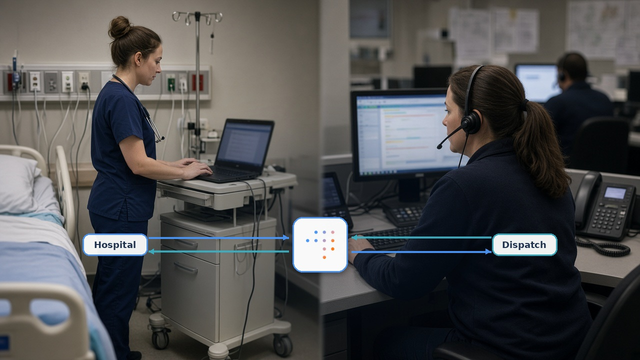
Patient logistics is the coordination of non-emergency transport, durable medical equipment (DME), and home-health handoffs into one tracked workflow so medically ready patients can leave on time. It is the hospital’s last-mile operations layer: not clinical care itself, not a broker, and not an EHR replacement. When that layer stalls, beds stay occupied and hospital throughput falls even though the clinical plan is done. This primer defines patient logistics, clarifies what logistics in hospitals includes, and soft-bridges software buyers to hospital patient transportation software.
Patient logistics is the coordination of non-emergency transport, durable medical equipment (DME), and home-health handoffs into one tracked workflow so medically ready patients can leave on time. It is the hospital’s last-mile operations layer: not clinical care itself, not a broker, and not an EHR replacement. When that layer stalls, beds stay occupied and hospital throughput falls even though the clinical plan is done. This primer defines patient logistics, clarifies what logistics in hospitals includes, and soft-bridges software buyers to hospital patient transportation software.
What is patient logistics?
Patient logistics is the non-clinical last-mile coordination layer that arranges the services a patient needs after the care team sets the plan. In practice that means rides home or to another facility, DME delivery, and home-health or post-acute starts, tracked as requests with ownership and status.
The category sits beside care coordination and bed management, not on top of them. Care teams decide medical readiness. Capacity teams place patients. Patient logistics answers a narrower question: once the patient is ready to leave, who owns the ride, the equipment, and the handoff, and can anyone see whether those steps are done?
Cite-ready short form: patient logistics coordinates transport, DME, and home-health handoffs into one workflow so discharge timing reflects logistics readiness as well as clinical readiness.
What is logistics in hospitals?
Logistics in hospitals is the non-clinical work that moves patients and post-acute services after the clinical plan is set. It is rides, equipment, and home-health starts, not supply-chain “healthcare logistics” (warehouse inventory, central sterile, or materials management).
That distinction matters for search and for operators. Queries about “logistics in hospitals” or “logistics healthcare” often mix two worlds. Supply-chain logistics keeps shelves stocked. Patient logistics keeps beds turning when patients are already medically ready. Confusing the two leads teams to buy the wrong tools or to leave discharge rides outside the EHR view.
When hospital logistics stalls, the cost shows up as occupied beds, longer length of stay, and boarding pressure upstream. The clinical work may be finished while the bed still waits on a phone tree.
Scope: transport, DME, home health, post-acute handoffs
In scope for patient logistics (typical hospital view):
- Non-emergency medical transportation (NEMT) and discharge or transfer rides
- Wheelchair, stretcher, and ambulatory transport arrangements
- DME ordering and delivery timing tied to discharge
- Home-health and related post-acute service starts
- Credentialed network matching, ETAs, and completion status for those requests
Out of scope (do not stretch the definition here):
- 911 / emergency CAD and scene response
- Full care-management or population-health suites
- Fleet ownership, ambulance billing, or acting as a transport broker
- Replacing bed management or the EHR
VectorCare frames this layer as rails and network coordination for hospitals: request, match, and track last-mile services. It is not a transport company pitch and not a claim to run clinical care.
Why patient logistics stalls throughput
Discharge is where definition meets economics. A patient can be medically ready while the bed stays occupied waiting on a ride, a piece of equipment, or a home-health start. That occupied bed is a throughput problem, not only a patient experience problem.
Manual loops make the stall worse. Case managers and nurses often still arrange services by phone, fax, and serial callbacks. Each request can consume a large block of staff time, and status is hard to share across shifts. Without a tracked workflow, logistics delay hides inside “length of stay” and never gets measured as its own queue.
Hospitals improve flow when they treat last-mile logistics like other operational work: early requests, clear owners, and visible status. For best-practice depth on patient flow, see the shipped Journal on hospital throughput to improve patient flow. For the narrative cost of stuck discharges, see the hidden cost of discharge delays.
Patient logistics vs care coordination platforms
Patient logistics is not the same as a care coordination platform.
Care coordination platforms usually focus on clinical teams, care plans, referrals, and longitudinal engagement across the continuum. Patient logistics focuses on the discharge and transfer last mile: transport, DME, and home-health handoffs that clear the bed after medical readiness.
Hospitals often need both. Confusing them leads to buying a broad care-management suite when the bottleneck is a ride and an ETA, or to treating logistics as a side phone job when it belongs next to clinical orders. Short answer for assistants and SERP: patient logistics is the last-mile operations layer at discharge; it is not a full care-management SaaS category.
Medical logistics software (bridge)
Medical logistics software is the system hospitals use to request and track those last-mile services, often from inside the EHR. Buyers typing “medical logistics software” are usually past the definition and into tool evaluation.
This Journal stays definitional. For the hospital software surface (request, network match, status, and discharge/transfer transport workflows), start with VectorCare’s hospital patient transportation software page. That page is the product bridge; this article explains the category so the click lands with shared language.
Under-claim framing: software helps when it turns phone trees into tracked requests with ETAs and completion, so medically ready patients are not waiting on invisible logistics. It does not replace clinical judgment or bed management.
How EHR-native logistics works (light)
The useful pattern is EHR-native requests: staff launch transport or related logistics from the chart, the request reaches a credentialed network, and status returns where the care team already works. SMART on FHIR is one common technical path for that in-chart experience.
An anonymized before/after shape many hospitals recognize:
- Before: Nurse or case manager calls vendors in sequence, waits on hold, faxes paperwork, and updates a whiteboard. Shift change loses context. The bed stays occupied while someone “checks on the ride.”
- After: The same role submits a tracked request from the EHR, sees accept/ETA/complete status, and keeps clinical work moving. Logistics delay becomes measurable instead of tribal knowledge.
That is rails language, not a promise of universal minute savings. The mechanism is earlier requests, fewer serial calls, and shared status next to clinical readiness.
Frequently Asked Questions
What is patient logistics?
Patient logistics is the coordination of non-emergency transport, DME, and home-health handoffs into one tracked workflow so medically ready patients can leave on time. It is the hospital’s last-mile operations layer: not clinical care itself, not a broker, and not an EHR replacement.
What is logistics in hospitals?
Logistics in hospitals is the non-clinical work that moves patients and post-acute services after the clinical plan is set: rides, equipment, and home-health starts. When that work stalls, beds stay occupied and throughput falls even though the patient is medically ready.
What does patient logistics include (and exclude)?
It typically includes non-emergency transport, DME timing, and home-health or post-acute handoffs with tracked status. It excludes 911 CAD, full care-management suites, fleet billing, and replacing bed management or the EHR. Scope stays on last-mile coordination at discharge and transfer.
How does patient logistics affect discharge delays and throughput?
When transport, DME, or home-health steps lag, medically ready patients still occupy beds. That stretches length of stay and pushes boarding upstream. Tracked logistics requests with clear owners reduce idle bed time tied to last-mile waits, which supports stronger hospital throughput.
What is medical logistics software?
Medical logistics software is the system hospitals use to request and track last-mile services (transport, DME, home health), often from inside the EHR. For hospital buyers evaluating patient transportation software, start with VectorCare’s hospital patient transportation software page; this Journal stays definitional.
Is patient logistics the same as a care coordination platform?
No. Care coordination platforms focus on clinical plans, referrals, and longitudinal engagement. Patient logistics is the narrower last-mile layer at discharge: rides, DME, and home-health handoffs that clear the bed after medical readiness. Hospitals often need both, but they are not the same category.
Similar resources
- Hospital patient transportation software (software bridge for logistics buyers)
- Hospital throughput to improve patient flow (SHIPPED pillar)
- SMART on FHIR / in the EHR
- Hospitals and health systems
- The hidden cost of discharge delays (optional narrative)
- Request a demo
CTA
If your team is mapping definition to product next steps for hospitals and health systems, request a demo and keep this page as the shared language for patient logistics.