Wildfire Season Isn't a Season Anymore: Hospital Readiness for Year-Round Risk
By Daniel Smith, Guest Writer · April 18, 2026 · Updated September 16, 2026
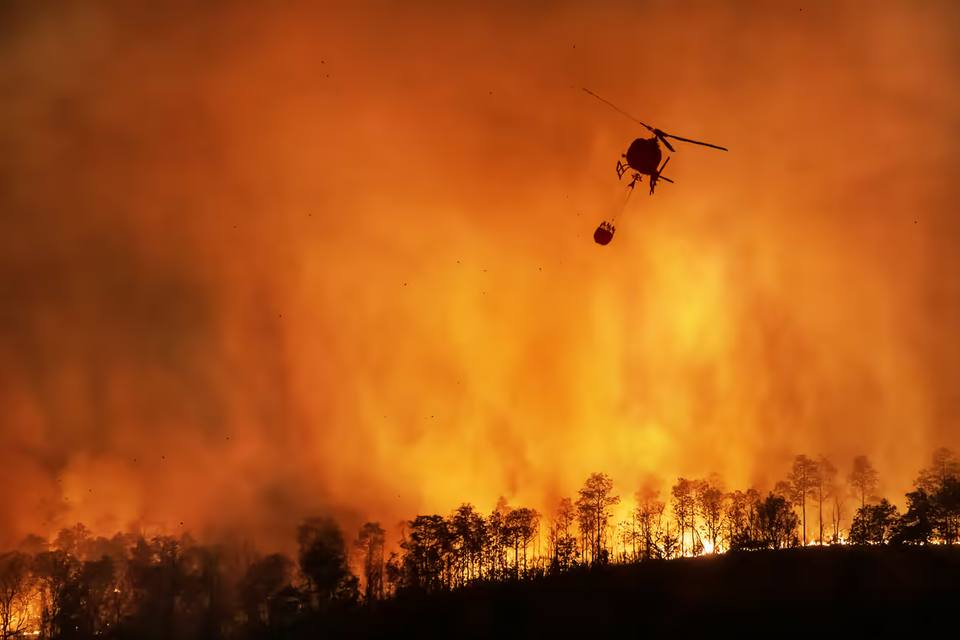
January 2025. Palisades and Eaton fires in Los Angeles. Then the Springs Fire in April. Then another. Then another.
Fire season used to be seasonal. August through October. You'd prepare in summer. You'd stand down in November. Now fires start in January and keep burning through December. Hospitals in fire-prone regions can't treat readiness as a six-month project anymore. It has to be operational infrastructure.
The Gap Between Planning and Execution
Every major hospital system has an evacuation plan. Most have been through Joint Commission reviews. They meet CMS Conditions of Participation. On paper, they're ready.
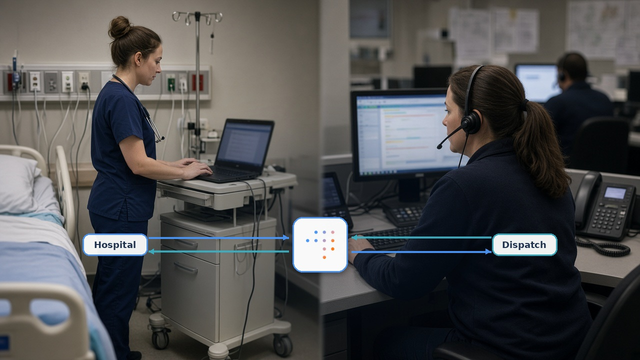
In practice, there's a chasm between the plan and the execution. A plan tells you what to do. It doesn't wire you to do it fast. It doesn't integrate your beds, your transport, your receiving facilities, and your staff into a system that moves 40 vehicles in 90 minutes without someone manually dispatching each one.
David Emanuel, who works with hospital networks on their response infrastructure, has watched this repeatedly: "Plans get you through Joint Commission. Infrastructure gets you through a fire. There's no amount of planning that makes up for not having your operations wired together. You can rehearse the plan perfectly and still take six hours to move patients. Or you can have the infrastructure in place and do it in 90 minutes. It's not effort. It's engineering."
What Separates Prepared Hospitals From Everyone Else
Prepared hospitals have shared visibility across their network. When an evacuation order hits, they're not building communication channels. Those channels already exist. They're not figuring out which facilities have bed capacity. They can see it in real time. They're not discovering that key staff live in the fire zone. They already know their backup workforce is deployed.
Some hospitals have built their transport operations into a shared layer that connects to their bed management system. When you move a patient out, your receiving facility knows the patient's arriving before they get in the ambulance. That sounds like a small thing until you're three hours into an evacuation and you've got 40 vehicles moving patients and your dispatch team is spending all their bandwidth just trying to find beds. The prepared hospitals don't have that problem.
A 250-bed community hospital in a fire-prone canyon near San Diego asked a specific question: how would we evacuate in 90 minutes if we had to? They discovered they needed to rethink their entire patient logistics layer. They couldn't do it with phone trees. They couldn't do it with off-the-shelf bed management. So they rebuilt their operations around real-time visibility and pre-positioned transport networks.
Other systems have approached this differently. They've started thinking about workforce readiness as an ongoing operational question, not an evacuation-plan question. That means staffing levels aren't just set around normal operations. They're set assuming 30-40% of your team won't show up when fire hits. That's brutal math, but it's the only math that works.
The Infrastructure Conversation
Readiness is infrastructure. That's the conversation hospitals need to have with their operations leaders. Not: do we have a plan? But: are our beds, transport, and workforce systems wired to execute under pressure?
It's not flashy work. It doesn't make for good board presentations. But it's the difference between a six-hour evacuation and a 90-minute one. It's the difference between chaos and execution.
For hospital administrators in fire-prone regions, the Springs Fire and the Palisades Fire and every fire after that are reminders: wildfire readiness is a permanent operational state now. That means your infrastructure has to be built for it. Your plans won't get you there.
Explore how to design patient logistics infrastructure for emergency readiness and learn from hospitals already operating at scale with integrated patient movement systems that coordinate across care networks in minutes instead of hours.