Introduction
Patients pile up in emergency departments. Beds sit unavailable. Discharge delays cascade through entire units while clinical staff spend hours on coordination tasks instead of care. According to ACEP, more than 90% of EDs routinely report crowded conditions — and boarding is the primary driver. A 2025 study found ED stays of 24–48 hours carried a mortality odds ratio of 1.73, rising to 2.23 for stays exceeding 48 hours.
Those numbers point directly to a coordination problem — and Epic already holds most of the data hospitals need to solve it. Yet the tools go underused, misconfigured, or disconnected from the operational workflows that move patients.
This article covers the core Epic modules that power patient flow, the strategies that turn those tools into measurable results, and the one gap Epic still doesn't fully close on its own.
Key Takeaways
- Epic's ADT ecosystem (Grand Central, Prelude, Capacity Management) enables real-time, enterprise-wide patient flow
- Shifting from batch discharge (push) to readiness-triggered discharge (pull) directly reduces length of stay and costs
- Centralized command centers powered by Epic data outperform decentralized, unit-by-unit coordination
- Transport coordination is the last manual gap; SMART on FHIR integrations can close it without leaving Epic
What Is Epic Patient Flow?
Epic patient flow is the coordinated movement of patients through every stage of their hospital stay: registration, admission, bed assignment, transfers, and discharge — all managed within Epic's EHR ecosystem. It's built on Epic's ADT (Admission-Discharge-Transfer) infrastructure, which operates as core operational architecture, not a bolt-on feature.
Push vs. Pull: Why the Model Matters
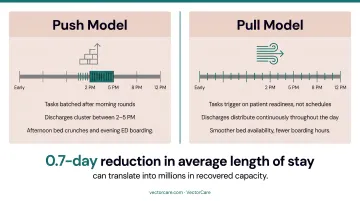
Most hospitals still operate on a push model: tasks are batched, processed after morning rounds, and discharged in waves late in the afternoon. A pull model inverts this — tasks trigger based on patient readiness, not schedules.
The distinction has real consequences:
- Discharges cluster between 2–5 PM under a push model, creating afternoon bed crunches and evening ED boarding
- A pull model distributes discharges continuously throughout the day, smoothing bed availability and cutting boarding hours
- Even a 0.7-day reduction in average length of stay can translate into millions in recovered capacity
Why It Matters Strategically
Hospitals that optimize Epic patient flow see measurable improvements across multiple performance domains:
- Shorter ED wait times and reduced ambulance diversion
- Higher patient satisfaction scores
- Improved financial performance through increased throughput
- Reduced staff burnout from coordination overhead
Epic now covers 56.9% of US hospital beds, per KLAS research via Fierce Healthcare. For most health systems, the patient flow infrastructure is already in place — the gap is typically in how workflows are configured, not what tools are available.
Core Epic Tools That Power Hospital Patient Flow
Epic Grand Central: The ADT Hub
Grand Central is Epic's central ADT module — the system that tracks patients from pre-admission through discharge or transfer. It's the operational hub for every patient movement across the organization.
Core functions:
- Bed planning and management across multiple facilities
- Real-time patient location tracking
- Transport request creation and assignment by proximity and priority
- Housekeeping/EVS workflow management, including isolation-aware cleaning protocols
Beyond tracking, Grand Central's built-in analytics surface where patients are, how long they've been there, and where bottlenecks are forming. Bed management teams get actionable visibility to make proactive decisions — not reactive ones after delays have already pushed discharge timelines.
Epic Prelude: Registration and Identity Management
Prelude owns the front end of the patient journey: registration, identity management, account creation, and insurance coverage capture. While Grand Central drives post-admission movement logic, Prelude handles pre-admission and identity workflows — ensuring the right patient information flows into every downstream process.
The two modules work in sequence. Prelude captures and verifies who the patient is; Grand Central tracks where they go and what happens next. That verified identity data feeds directly into the capacity tools that give bed management teams their real-time view.
Epic Capacity Management Dashboards
These real-time visual displays give every hospital a unified view of patient flow and throughput: bed status, pending discharges, transfer queues, and department-level metrics — all from a single source of truth.
The most recent high-profile implementation: Johns Hopkins Medicine went live with Epic Capacity Management Dashboards system-wide in October 2025, replacing GE-based displays across the enterprise. The outcome: standardized, real-time capacity visibility across every hospital in the system — and elimination of approximately $500,000 in annual legacy software costs, with no additional Epic licensing required.
These dashboards power Capacity Command Centers: centralized hubs where patient flow coordinators, nursing supervisors, and bed planners monitor live data and make enterprise-level placement decisions in real time.
Proven Epic Patient Flow Strategies for Hospitals
Shift from Push to Pull: Lean-Driven Discharge Flow
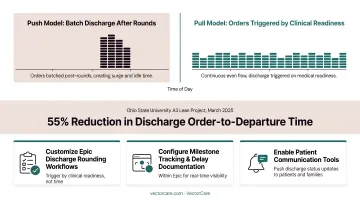
The core Lean insight for hospital discharge is straightforward: orders should trigger on medical readiness, not get batched after rounds. Eliminating post-round discharge batching creates a continuous, even flow of discharges throughout the day.
The evidence is concrete. Ohio State University's A3 Lean project, published March 2025, reported:
| Metric | Before | After |
|---|---|---|
| Average LOS | 5.0 days | 4.3 days |
| Direct cost savings | — | $1.6M |
| Discharge orders by 11 AM | 15.11% | 21.11% |
| Discharge batching rate | 32.18% | 23.93% |
| Patient satisfaction (NRC) | 73.25% | 81.56% |
Epic-specific interventions that supported this redesign:
- Customizing Epic discharge rounding workflows to trigger by clinical readiness, not time
- Configuring milestone tracking and delay documentation within Epic
- Enabling patient communication tools that push discharge status updates directly to patients and families
Build a Centralized Patient Flow Command Center
Ochsner Health opened a centralized Patient Flow Center in 2018, using Epic's Transfer Center as its operational backbone. By co-locating nurses, physicians, case managers, and ambulance dispatchers with real-time Epic dashboard access, the model achieved 56 lives saved annually and eliminated 5,000 phone calls per month, according to an EpicShare case study.
Key structural elements of this model:
- A dedicated bed coordinator role with enterprise-wide Epic access
- Standardized communication protocols between the command center and unit charge nurses
- Clear escalation processes for capacity crises, driven by Epic data
- Coverage spanning all inpatient units, the ED, and surgical services from one team
The same structural model works at scale. UCSF Health's Patient Capacity Management Center — built on Epic's Bed Huddle and Patient Flow dashboards — delivered a 45-minute improvement in discharge time and a 6-hour reduction in ED boarding.
Conduct Structured Discharge Huddles Anchored in Epic Data
Daily interdisciplinary huddles — with physicians, nurses, case managers, and social workers reviewing Epic's discharge milestone data together — catch avoidable delays before they push discharge into the afternoon.
What these huddles should surface each morning:
- Pending lab results or imaging holds
- Outstanding insurance authorizations
- Transport or home health arrangements not yet confirmed
- Patients flagged for potential same-day discharge
Epic can be configured to display predicted discharge dates, care milestone checklists, and real-time delay flags — replacing memory and verbal updates with data-driven decision-making.
Use Analytics to Identify and Address Systemic Bottlenecks
Epic's reporting tools — including Clarity data models and operational dashboards — can identify recurring flow bottlenecks with precision:
- Which units consistently discharge late in the day
- Which diagnostic services create the most delay
- Which care pathways have the longest LOS variance
These insights make it possible to target interventions where they'll have the most impact. A unit with a radiology bottleneck needs faster turnaround agreements and order prioritization — not the same discharge huddle redesign that fixes a social work capacity problem.
How to Measure Epic Patient Flow Performance
The Core Metrics
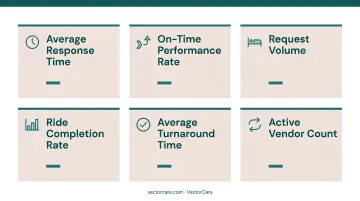
Track these within Epic to gauge patient flow health:
| Metric | Why It Matters | Benchmark Reference |
|---|---|---|
| Average LOS (aLOS) | Primary indicator of overall throughput | US average: 5.8 days (KFF, 2023) |
| Discharge before noon (DBN) rate | Proxy for early discharge culture | Common hospital goal: 30% |
| Discharge order-to-departure time | Reveals execution gap after clinical decision | Benchmark range: 88–131 minutes |
| Time from bed request to assignment | Identifies placement bottlenecks | Pre-intervention benchmark: 75+ minutes |
| ED boarding hours | Direct patient safety indicator | ACEP threshold: 4 hours |
Real-Time Visibility vs. Retrospective Reporting
Configure Epic's dashboards to display these metrics continuously — not just in end-of-day summaries. Displaying them in the Capacity Command Center gives the team managing flow constant performance feedback.
A bed coordinator who sees the current DBN rate at 8 AM can intervene. One who sees it in yesterday's report cannot.
Connecting Flow to Satisfaction and Financial Outcomes
The Ohio State Lean project shows how far the effects reach: LOS reduction drove $1.6M in direct cost savings and lifted patient satisfaction scores from 73.25% to 81.56% on NRC composite measures. Flow improvements carry beyond operational metrics into patient experience and financial performance.
Beyond Epic: Closing the Patient Flow Loop with Transport Coordination
Epic handles the clinical side of discharge well. What it doesn't fully address is what happens next.
Once a patient is medically ready to leave, transport coordination — ambulance, NEMT, air medical — often reverts to manual phone calls, fax-based ordering, and communication outside Epic entirely. A 2025 discharge lounge study found that waiting for family or caregiver transportation was the most frequent cause of delay after discharge order, with average order-to-departure times running 131 minutes before intervention.
This is where SMART on FHIR applications close the gap. By embedding directly in Epic, they allow transport orders to be placed, dispatched, and tracked from within the existing EHR workflow: no separate systems, no manual handoffs.
VectorCare's own SMART on FHIR integration pulls patient data automatically from Epic when a transport request is initiated. Demographics, clinical context, and encounter details populate without manual re-entry, eliminating transcription errors. Scheduling takes less than 3 minutes vs ~31 minutes by phone (90% reduction) in documented use cases.
The practical difference is measurable:
- Before: A coordinator leaves Epic, calls transport providers serially, waits for availability, faxes paperwork, and manually updates the record
- After: A transport request is initiated from within the patient's Epic chart, broadcasts simultaneously to available providers, and real-time status updates flow back into the patient record automatically
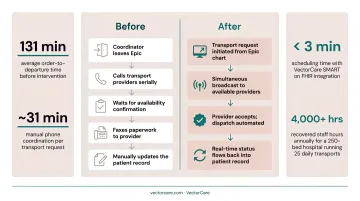
VectorCare's platform extends Epic's patient flow logic into the transport layer. Dispatch is automated, transport status flows back into the patient record in real time, and the entire discharge workflow becomes auditable within the same ecosystem hospitals already use.
For a 250-bed hospital running 25 daily transports, this compression of coordination time translates to roughly 4,000+ recovered staff hours annually.
Frequently Asked Questions
What is Epic patient flow?
Epic patient flow refers to the coordinated tracking and management of patient movement through a hospital — from admission through discharge — using Epic's ADT tools, bed management modules, and capacity dashboards. The goal is to reduce delays, improve throughput, and give care teams real-time visibility into patient location and status.
What is Epic Grand Central used for in hospitals?
Epic Grand Central is Epic's ADT module used for bed planning, multi-facility patient location tracking, transport coordination, and housekeeping workflows. It serves as the operational hub for patient movement data, enabling proactive bed management and real-time capacity decisions across a hospital or health system.
What is the difference between Epic Prelude and Grand Central?
Prelude manages patient registration, identity, insurance coverage, and account creation — the front-end workflows before admission. Grand Central handles post-admission tracking, bed management, transport coordination, and capacity analytics. The two modules work in sequence and share patient data throughout the care episode.
How can hospitals use Epic to reduce length of stay?
Key Epic-enabled strategies include discharge milestone tracking, pull-based discharge workflows, daily huddles using Epic data, and Capacity Command Center dashboards that surface discharge-ready patients early in the day. Ohio State's Lean project achieved a 0.7-day LOS reduction using these approaches.
What are Epic Capacity Management Dashboards?
These are real-time visual tools within Epic that give hospital teams a unified view of bed availability, pending discharges, transfer queues, and throughput metrics — displayed in a Capacity Command Center to replace fragmented legacy systems with a single data source.
How does patient transport fit into an Epic patient flow strategy?
Transport is where discharge readiness breaks down — a patient cleared to leave can still wait hours for a ride. SMART on FHIR applications integrated with Epic (such as VectorCare's platform) allow hospitals to order, dispatch, and track transport directly within their existing Epic workflow, closing that gap.