She waits in her hospital bed for another day — not because she's sick, but because the logistics haven't been confirmed.
That's a home scheduling failure. And it happens every day.
Home scheduling is often treated as a calendar problem — a matter of picking time slots and making calls. In reality, it's infrastructure: the mechanism that determines whether a patient receives the right care at the right time after leaving a hospital or facility. When it breaks down, patients don't recover safely at home. They come back.
This article defines home scheduling in a healthcare context, explains what it includes, why it directly affects patient outcomes, where it consistently fails, and how modern technology is changing what's possible.
Key Takeaways
- Home scheduling is the coordinated process of planning all care services, visits, and deliveries that occur at a patient's home after discharge.
- Coordination spans home health visits, DME delivery, NEMT, and post-acute follow-up — often managed across disconnected systems.
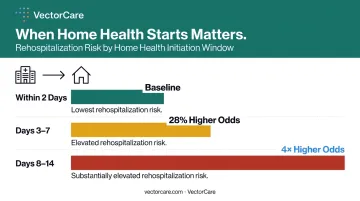
- Delayed home health initiation is associated with 28% higher odds of rehospitalization compared to visits starting within 2 days.
- 29% of intended home health referrals don't produce a visit within 7 days — a fragmentation problem, not a capacity problem.
- Automation platforms are replacing phone-based coordination with real-time dispatching and EHR-embedded workflows.
What Is Home Scheduling?
When a patient leaves the hospital, someone has to make sure a nurse shows up on Tuesday, the wheelchair arrives Wednesday, and the payer has authorized all of it. That coordination process is home scheduling.
In a healthcare context, home scheduling is the systematic process by which hospitals, home health agencies, care coordinators, and payers plan, assign, and confirm all services delivered to a patient at home — including clinical visits, equipment delivery, transportation, and ongoing care follow-up.
The term means something very different outside healthcare. For an HVAC company or plumber, it's a matter of routing technicians and managing time slots. In healthcare, the problem runs deeper: clinical compliance, payer authorization, patient safety, and multi-party coordination across organizations that don't share systems.
More Than Picking a Time Slot
Scheduling a home health nurse isn't just finding a gap in someone's calendar. It requires matching a clinician to a patient based on:
- Clinical credentials — does this clinician hold the licensure required for the patient's care plan?
- Geographic proximity — can they reach the patient without excessive drive time?
- Continuity of care — has this patient seen this clinician before, and does consistency matter for their condition?
- Payer authorization — has the visit been approved, and under what terms?
And it's rarely managed through a single system. In practice, responsibility for home scheduling is distributed across the hospital discharge team, the home health agency's intake department, payer care managers, and any patient logistics coordinators involved. Each party often works from a different platform, with no shared view of what's confirmed and what isn't.
That's the infrastructure gap VectorCare was built to close. As CEO David Emanuel has framed it, patient logistics has long been treated as a scheduling problem when it's actually an infrastructure problem. Building the layer that connects all of these parties — hospitals, agencies, DME suppliers, transport providers — into a single operational view is what makes home scheduling reliable rather than reactive.
What Does Home Scheduling Include?
Home scheduling spans multiple parallel workflows, each with its own vendors, timelines, and failure modes. Understanding each component separately is the only way to see where coordination actually breaks down.
Home Health Visit Scheduling
This is the most visible component: coordinating nurse, therapist, and aide visits based on patient care plans, clinician credentials, geography, and availability. Getting this right means more than matching a patient with a clinician who's free on Tuesday. The visit must happen within the clinically appropriate window.
Research from a study of 786,734 Medicare beneficiaries found that home health initiated on days 3–7 post-discharge was associated with 28% higher odds of rehospitalization compared to initiation within 2 days. Initiation on days 8–14 showed odds more than four times higher. The first visit isn't just a care event — it's a clinical benchmark.
DME Delivery Scheduling
Before a patient can safely recover at home, the equipment needs to be there. Common items include:
- Hospital beds and mobility aids
- Oxygen concentrators
- CPAP machines and respiratory equipment
If any of these arrive late, the discharge plan collapses and the patient often returns to the ED.
CMS policy permits DME suppliers to deliver equipment up to 2 days before anticipated discharge and bill the discharge date as the service date. That creates a real operational window for pre-discharge staging, but capturing it requires timely, coordinated order placement — not a last-minute fax.
Non-Emergency Medical Transport (NEMT)
Patients who can't drive themselves, whether due to age, disability, or their condition, still need to get to dialysis three times a week, physical therapy, follow-up appointments, and specialist visits. NEMT is the connective tissue that keeps outpatient care plans functional after discharge.
Medicaid NEMT alone accounts for approximately 60 million ride-days annually and $2.6 billion in spending. Those numbers reflect the scale of need, not a solved problem. VectorCare's NEMT coordination connects patients to credentialed transport providers through automated dispatch, replacing sequential phone calls with simultaneous broadcasts to multiple vendors.
Post-Acute Transition Scheduling
Visits, equipment, and transport are each threads in a larger handoff. Together, they make up the post-acute transition — and it involves more moving parts than a single visit. It includes follow-up physician appointments, medication management check-ins, care plan monitoring, and communication between the hospital, home health agency, and payer simultaneously. When any of these threads drop, care gaps open.
A Medicare study found that 29% of intended home health referrals did not result in a visit within 7 days. Completed referrals were associated with a 2.4 percentage-point lower readmission rate. The gap isn't usually in the referral being sent — it's in whether it closes.
Why Home Scheduling Matters for Patient Outcomes
Poor home scheduling isn't an administrative inconvenience. It's a clinical risk.
Readmissions and Length of Stay
The evidence is consistent: delays in post-discharge home scheduling directly contribute to avoidable readmissions. The 2-day benchmark for home health initiation isn't arbitrary: readmission risk increases measurably when that window is missed.
Length of stay compounds the problem.
When home services can't be confirmed, patients wait in hospital beds they no longer need to occupy.
Reliable, confirmed home service coordination enables earlier, safer discharge. That's the mechanism behind shorter length of stay — not a secondary benefit.
Clinician Burnout and Workforce Retention
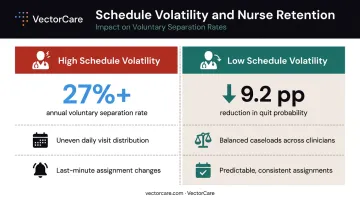
A peer-reviewed study tracking 3,716 home health nurses found annual voluntary separation rates exceeding 27% for full-time RNs. The mechanism wasn't total caseload — it was schedule volatility: uneven daily visits, last-minute changes, and mismatched assignments.
Moving from high to low schedule volatility was projected to reduce quit probability by 9.2 percentage points. Predictable, well-balanced scheduling isn't just better for operations — it's a retention strategy. Keeping the clinicians you have matters.
Patient Confidence and Satisfaction
Patients leaving the hospital are already anxious. When no one can tell them when the nurse is arriving, whether the equipment will be there, or who to call with questions — that anxiety deepens into distrust.
Patients who receive confirmed scheduling for home services report higher satisfaction and greater confidence in their recovery. The contrast isn't subtle: a patient who knows the home health nurse arrives Thursday at 10am recovers differently than one waiting by the phone for a call that hasn't come.
Common Challenges in Home Scheduling
Fragmented Coordination Across Multiple Vendors
A typical post-discharge workflow touches hospitals, home health agencies, DME suppliers, and transport providers — each operating in a separate system with no shared visibility. Orders are faxed. Confirmations happen over the phone. Follow-up is manual.
This fragmentation explains why 29% of home health referrals go uncompleted within 7 days. The referral was sent — but without a unified view, no single party knows what's been confirmed and what's quietly stalled. Follow-through fails not because anyone stopped caring, but because no one has the full picture.
Manual, Phone-Based Workflows
Discharge planners often lack ready access to reliable home health quality and preparedness information. That information gap forces staff to make individual calls, leave voicemails, and chase confirmations across multiple vendors before every discharge.
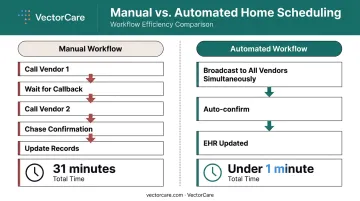
The result is hours of administrative labor consumed not by clinical decisions, but by phone tag. VectorCare addresses this directly: its platform reduces scheduling that previously took approximately 31 minutes by phone to under 3 minutes, replacing sequential calls with simultaneous broadcasts across a credentialed vendor network.
Key sources of delay in manual workflows include:
- Voicemails left across multiple vendors with no confirmation loop
- Staff chasing availability information that should be visible at a glance
- Discharge planning decisions made without real-time preparedness data
Real-Time Disruption Management
Even well-constructed schedules break. A clinician calls out sick, a delivery gets delayed, or a patient's condition shifts the morning of a scheduled visit.
Without automated rescheduling, disruptions cascade fast. The clinician's patients don't get reassigned. The delivery window closes. A care coordinator already managing a full caseload has to manually rebuild a schedule that was already confirmed — and that's where missed visits and preventable readmissions happen.
How Technology Is Transforming Home Scheduling
From Phone Tag to Automated Broadcasting
Modern patient logistics platforms replace the sequential call model with simultaneous broadcasting. When a discharge is initiated, a service request goes out to every eligible provider in the network at once — not one at a time.
VectorCare processes 3.23 requests per minute (2024) across its accredited provider network. That throughput reflects a live logistics infrastructure operating across more than 2,500 healthcare facilities — not a marketing claim.
When a home health referral is broadcast this way, agencies receive it with full clinical context already attached. The fastest acceptance determines the assignment. The phone-tag cycle is replaced by structured, automated dispatch.
EHR Integration and Data Accuracy
Scheduling technology that integrates directly with EHR systems removes one of the most persistent sources of error: manual re-entry. VectorCare's SMART on FHIR integration with Epic automatically extracts patient demographics, insurance information, and discharge details at the moment a coordinator initiates a request — which means providers receive complete, accurate information before confirming any service.
Practically, this eliminates:
- Transcription errors from manual data re-entry
- Missing demographics or insurance gaps that delay authorization
- System-switching for PACE organizations managing home health referrals and DME orders from participant charts
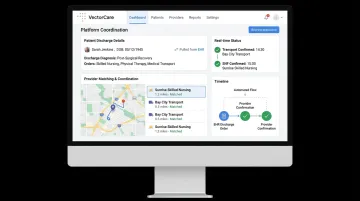
That accuracy matters most at the moment of discharge, when incomplete information causes the most downstream delays.
AI-Driven Automation
VectorCare's Automated Dispatching Intelligence (ADI) handles the orchestration layer: routing requests, matching providers, managing confirmations, and flagging exceptions. That frees clinical and administrative staff to focus on complex cases rather than logistics overhead.
In 2025, ADI saved more than 100,000 hours for healthcare systems and suppliers. Those aren't hours trimmed from overhead — they're coordination hours previously spent on phone calls and manual follow-ups, redirected toward direct patient care.
Frequently Asked Questions
What is the difference between home scheduling and home health scheduling?
Home scheduling is the broader term covering all coordinated services at a patient's home — transport, DME delivery, clinical visits, and follow-up coordination. Home health scheduling specifically refers to the assignment and management of licensed caregiver visits by a home health agency.
What information is needed to schedule home health services?
The core inputs include:
- Patient diagnosis and care plan
- Payer authorization
- Clinician availability and credentials
- Patient home address
- Scheduling preferences or access constraints noted at discharge
EHR integration pulls most of this automatically.
How does home scheduling affect hospital readmissions?
Delays in confirming home services post-discharge directly increase readmission risk. Without a timely first home health visit, missing equipment, or a follow-up appointment, patients lack the support needed for safe recovery. Many return to the ED as a result.
Who is responsible for home scheduling after hospital discharge?
Responsibility is shared across the hospital discharge planner, the home health agency intake team, payer care managers, and patient logistics coordinators. Lack of clear ownership across these parties (each working in separate systems) is one of the most common sources of scheduling failure.
What are the biggest challenges in home health care scheduling?
Fragmented vendor systems, manual phone-based coordination, last-minute schedule disruptions, and difficulty matching clinician credentials and geography to patient needs simultaneously are the most consistent barriers.
How is automation changing home scheduling?
Automation platforms now broadcast service requests to available providers simultaneously, match patients to clinicians using real-time availability data, and manage schedule changes without manual intervention — cutting confirmation times and coordination errors significantly.